Model Releases
The New Standard for AI Engineering: Anthropic Unveils Claude Opus 5.5
Anthropic's Claude Opus 5.5 arrives as a milestone release, delivering Fable-level performance at a 40% lower cost with unprecedented coding and alignment capabilities.
September 22, 2026
Model ReleaseClaude Opus 5.5
Introduction: A Milestone in Frontier AI
On September 22, 2026, Anthropic shifted the landscape of generative AI once again with the release of Claude Opus 5.5. This isn't just another incremental update; it is the flagship of the new Claude 5.5 family and represents a pivotal moment in the industry. After calling for a more measured pace in frontier model development, Anthropic has delivered a model that proves safety and extreme capability are not mutually exclusive.
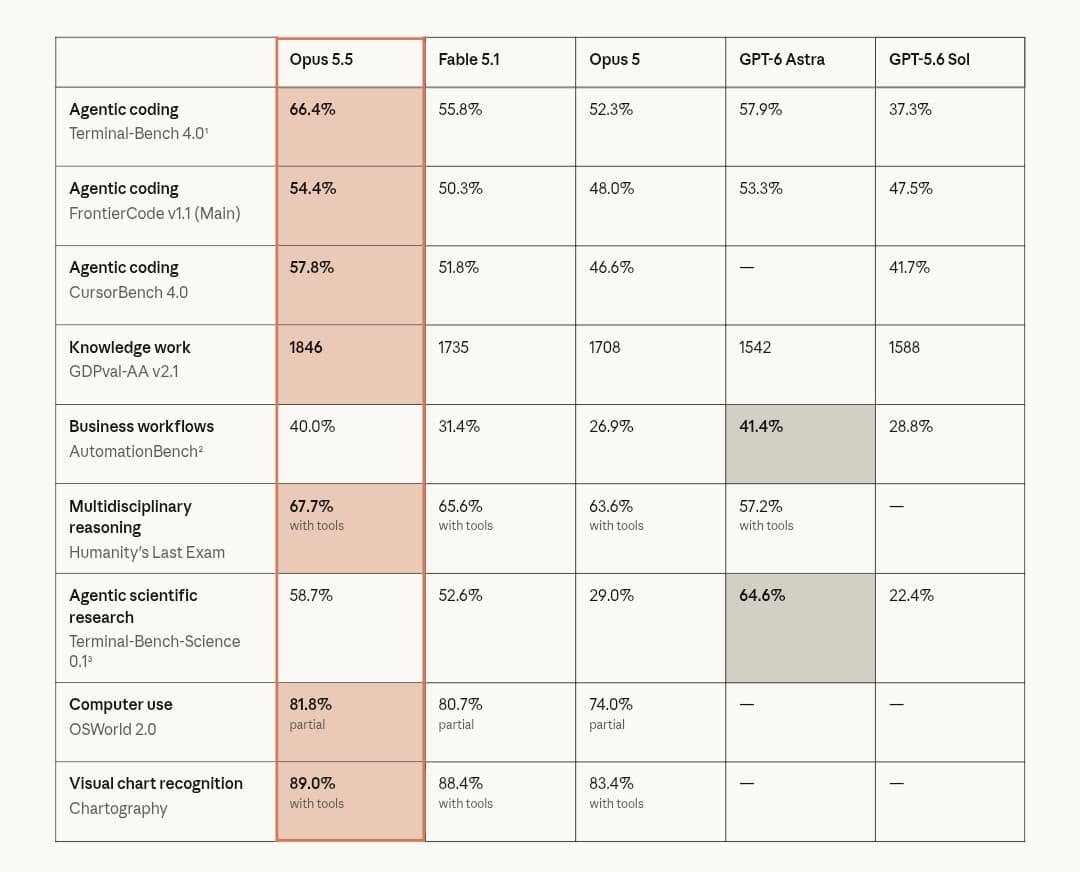
For developers and AI engineers, Opus 5.5 represents the 'sweet spot' of the current era. It manages to match the performance of the high-tier Claude Fable 5.1 on most professional workloads while simultaneously slashing the operational costs that have previously hindered large-scale agentic deployments. It is a model built for the era of autonomous workflows.
- First model in the Claude 5.5 family
- Performance parity with Claude Fable 5.1
- 40% reduction in running costs compared to Opus 5
- Extensively tested by external evaluators including Frontier Design and METR
Unprecedented Coding and Engineering Capabilities
The most striking evidence of Opus 5.5's power lies in its ability to handle massive-scale engineering tasks. In early testing, a developer successfully completed a 680,000-line code migration in under a single day—a feat that would traditionally take human teams weeks of meticulous planning and execution.
Beyond sheer volume, the model shows a sophisticated understanding of application architecture. In a series of web optimization tests, Opus 5.5 successfully reduced web app load times in 39 out of 40 attempts. This stands in stark contrast to its predecessor, Opus 5, which made smaller improvements that often inadvertently altered application behavior, leading to regressions.
- Massive scale migration: 680k lines of code in <24 hours
- High precision optimization: 97.5% success rate in web app load time reduction
- Superior creative coding: Highest score in single-prompt game building tests for graphics and polish
Safety, Alignment, and Robustness
Anthropic has doubled down on its commitment to AI safety with Opus 5.5. This model achieved the highest score to date on Anthropic's automated behavioral audit, the company's most comprehensive alignment suite. The testing regime has been significantly broadened to include longer-duration tasks, impossible tasks, and real-incident-based scenarios, as detailed in the official Opus 5.5 System Card.