Model Releases
OpenAI Releases GPT-Image-2.6 Image Generation Models
OpenAI's GPT-Image-2.6 introduces 50% faster generation, GIF creation, and specialized Flare and Sunburst API models for developers.
October 26, 2026
Model ReleaseGPT-Image-2.6
Introduction
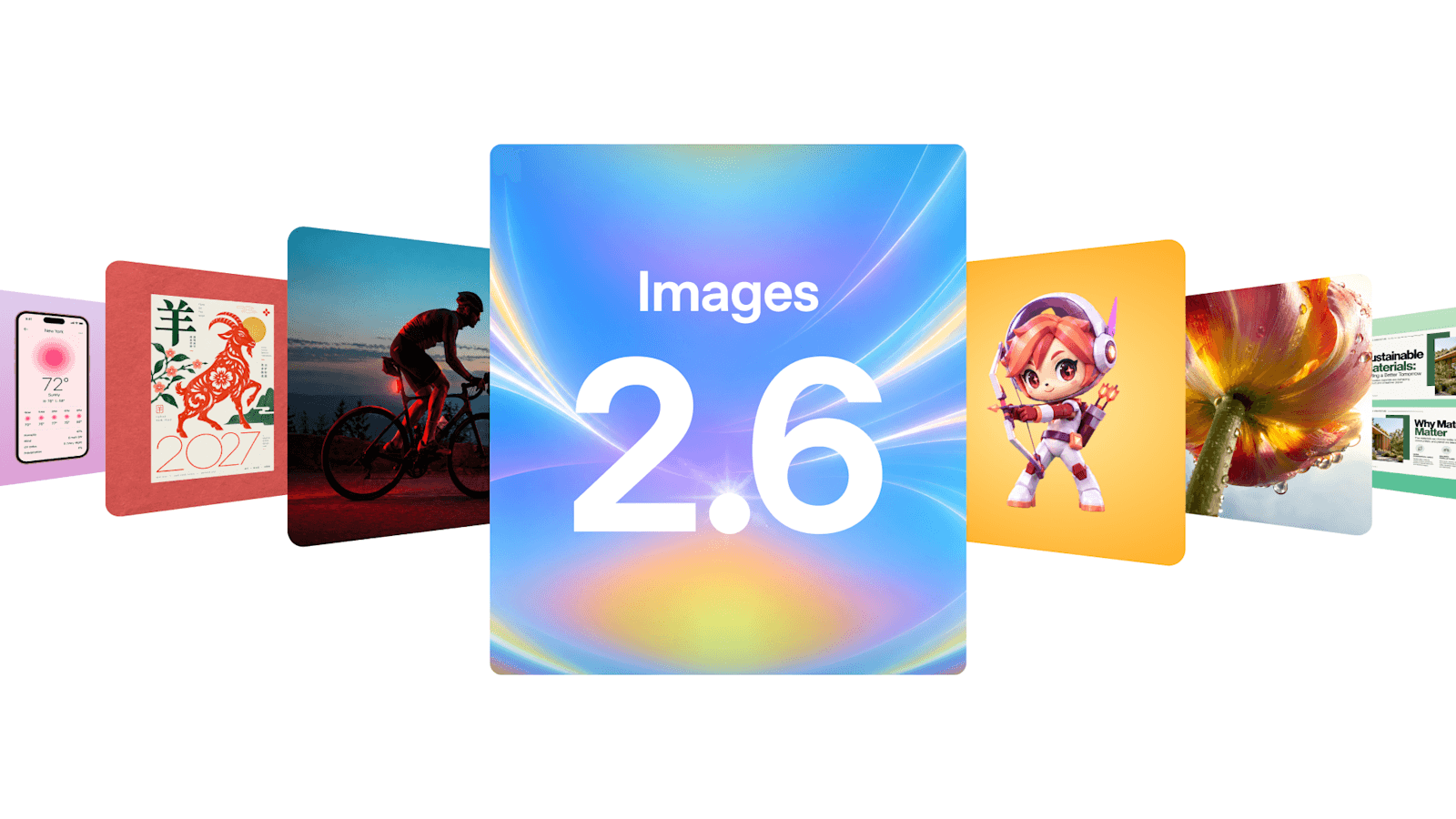
On October 26, 2026, OpenAI officially announced the release of GPT-Image-2.6, the next evolution in its generative media suite. Moving beyond static pixel synthesis, this update integrates motion capabilities and granular developer controls that signal a shift toward professional-grade creative workflows. The model is immediately available across ChatGPT, Codex, and the OpenAI API for all subscription tiers.
The scale of adoption for OpenAI's visual models is unprecedented. Current telemetry indicates that users are generating approximately 4 billion images per week across the ChatGPT, Codex, and API ecosystems, averaging over half a billion images every single day. GPT-Image-2.6 aims to optimize this massive throughput while providing much-needed precision for enterprise-level applications.
- Release Date: October 26, 2026
- Availability: ChatGPT, Codex, and API (all tiers)
- Primary Focus: Speed, motion (GIFs), and developer precision
Key Features & Architecture
The core of the GPT-Image-2.6 release is the introduction of motion synthesis. For the first time, the model supports native GIF creation, allowing users to animate mascots, create product loops, or generate reaction images directly from still prompts or simple hand-drawn sketches. This capability bridges the gap between static asset generation and short-form video production.
To accommodate diverse developer needs, OpenAI has bifurcated the API into two distinct model paths: Flare and Sunburst. This architectural decision allows engineers to optimize for either latency or fidelity depending on their specific product requirements. Furthermore, the model introduces a 'complexity parameter,' a new knob that allows developers to dictate how much computational planning the model performs before rendering, effectively balancing nuance against speed.
- Native GIF Generation: Animate sketches and prompts into loops.
- GPT-Image-2.6 Flare: Optimized for speed (as fast as 6 seconds) and layout-heavy tasks like posters.
- GPT-Image-2.6 Sunburst: Optimized for high-fidelity consistency and complex iterative edits.
- Complexity Parameter: Adjustable planning depth for varied output styles.
Performance & Benchmarks
GPT-Image-2.6 delivers a significant leap in operational efficiency, boasting generation speeds that are 50% faster than the previous generation. This throughput improvement is particularly evident in the Flare model, which is designed for rapid prototyping and real-time UI feedback loops.