Model Releases
Moonshot AI Releases Kimi-k2.7-code: Open-Weights Coding Model with 256k Context and Multimodal Reasoning
Moonshot AI’s kimi-k2.7-code brings open-weight coding, 256k context, multimodal input, tool calling, JSON mode, partial mode, and cheaper cached inference for developers building code agents.
June 12, 2026
Model Releasekimi-k2.7-code
Introduction
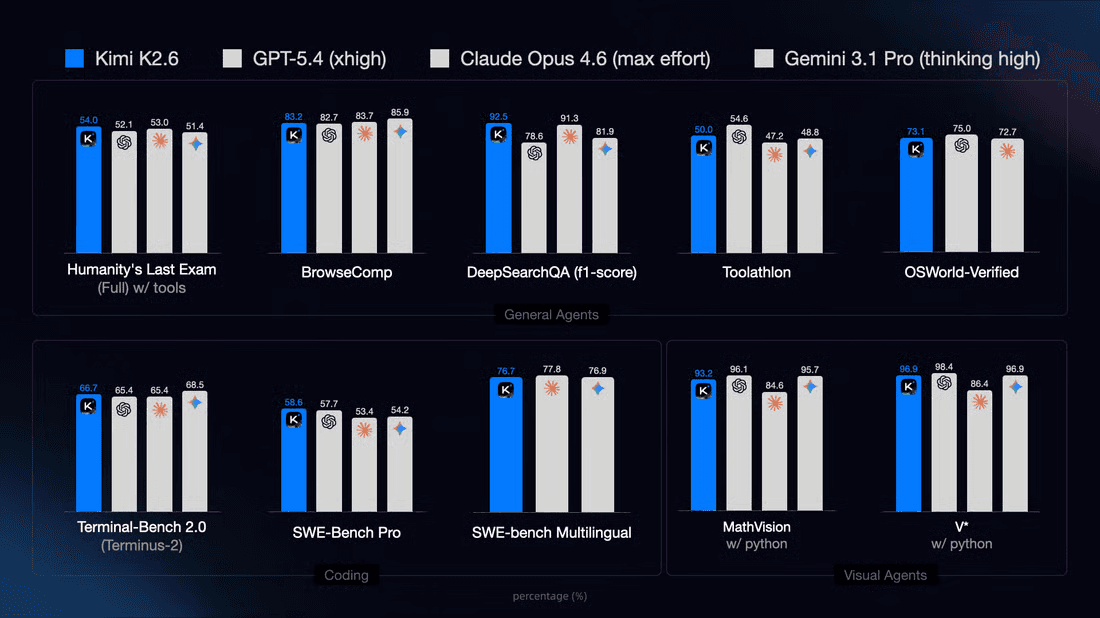
Moonshot AI has released kimi-k2.7-code, a new open-weights coding model designed for software engineering, autonomous agents, long-context reasoning, and multimodal development workflows. Announced on 2026-06-12, kimi-k2.7-code is positioned as a direct successor to Kimi K2.6, with Moonshot AI reporting major gains across coding and software benchmark suites while reducing the token cost of internal reasoning.
For developers, the headline is not just better benchmark performance. It is the combination of open weights, 256k-token context, long-thinking support, tool calling, JSON mode, partial mode, automatic context caching, and multimodal text-image-video input in one coding-oriented model. That mix makes kimi-k2.7-code relevant for code completion, repo-level refactoring, agent orchestration, RAG over large codebases, and AI IDE integrations.
- Model name: kimi-k2.7-code
- Provider: Moonshot AI
- Release date: 2026-06-12
- Category: coding model
- Open source: Yes
- Weights: open-weights
- Available via API, HuggingFace, and Kimi Code IDE
Key Features & Architecture
kimi-k2.7-code is an open-weights coding model from Moonshot AI. The release information does not disclose a fixed parameter count, but Moonshot frames the model as an open-weights system optimized for code, reasoning, and long-context software tasks. Compared with K2.6, kimi-k2.7-code is designed to spend fewer tokens internally while producing stronger outputs, which matters for latency, routing, and agent cost control.
The model supports a 256k-token context window with long-thinking and deep reasoning capabilities. In practical terms, that means it can process large repositories, lengthy design documents, multi-file diffs, test suites, logs, and product specifications without forcing developers to aggressively chunk every input. Moonshot also describes kimi-k2.7-code as using a native multimodal architecture, supporting text, image, and video input rather than treating visual data as an external add-on.
- 256k context window for long repositories, docs, logs, and multi-file tasks
- Long thinking and deep reasoning support for complex software workflows
- Native multimodal architecture for text, image, and video input
- ToolCalls support for agentic coding and external function execution
- JSON Mode for structured outputs and deterministic application integrations
- Partial Mode for streaming incremental responses in IDEs and agents