Model Releases
Microsoft releases MAI Image 2.7 image generation models
Microsoft's new MAI Image 2.7 achieves the top spot in image editing benchmarks with an Elo of 1215, significantly outperforming GPT Image 2.6 Sunburst at a fraction of the cost.
November 17, 2026
Model ReleaseMAI Image 2.7
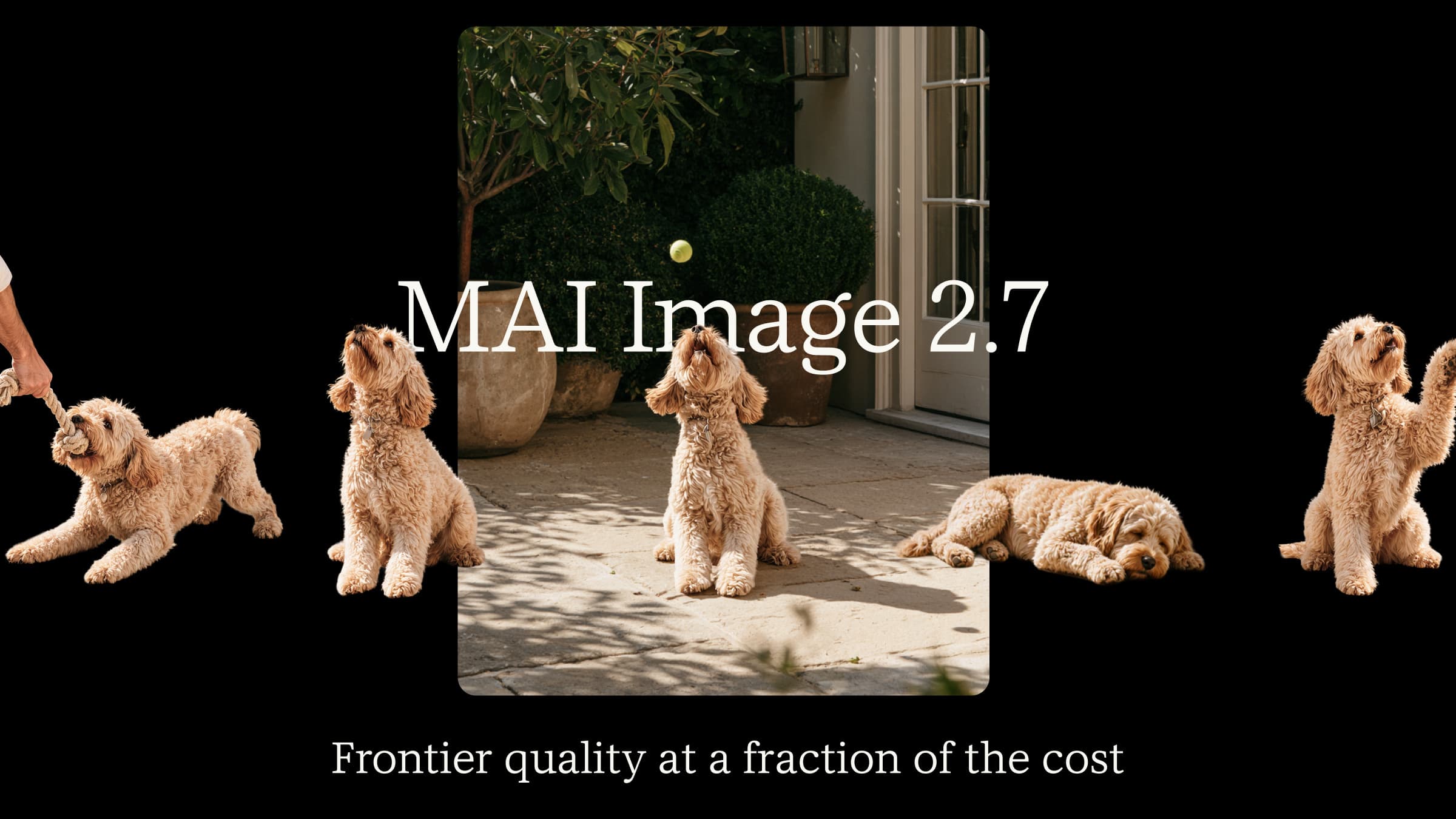
Introduction
On November 17, 2026, Microsoft marked a historical milestone in the generative AI landscape with the release of MAI Image 2.7. This isn't just an incremental update; it represents a fundamental shift in how diffusion models handle complex spatial reasoning and fine-grained semantic editing. By prioritizing both high-fidelity output and extreme cost-efficiency, Microsoft has positioned its MAI series as the new backbone for production-grade creative workflows.
The release comes at a critical time when developers are moving away from pure text-to-image generation toward sophisticated, iterative image manipulation. MAI Image 2.7 addresses this demand directly, offering unprecedented control over object attributes and spatial positioning, making it a formidable competitor to established industry leaders.
- Release Date: November 17, 2026
- Primary Focus: High-fidelity image generation and precision editing
- Key Innovation: Superior cost-to-performance ratio on the Pareto frontier
Key Features & Architecture
MAI Image 2.7 introduces advanced fine-grained editing capabilities that allow users to modify specific object colors, materials, or positions while maintaining absolute consistency across successive edits. This solves one of the most persistent problems in diffusion models: the 'drift' effect where changing one element inadvertently alters the entire composition.
A standout feature for commercial developers is the native support for transparent backgrounds. This allows for the immediate generation of product images, logos, and icons without the need for manual post-processing or secondary segmentation models. Furthermore, Microsoft has launched a new interactive Canvas workspace at labs.microsoft.ai, powered by the high-speed Flash variant, providing a real-time playground for iterative design.
- Fine-grained attribute control (color, material, position)
- Native transparency support for assets and logos
- Temporal consistency across multi-step editing sessions
- Interactive Canvas workspace powered by MAI Image 2.7 Flash
Performance & Benchmarks
The performance metrics for MAI Image 2.7 are nothing short of historic. According to Artificial Analysis data retrieved on November 16, 2026, MAI Image 2.7 has claimed the #1 spot in image editing with an Elo of 1215. This places it ahead of GPT Image 2.6 Sunburst (1211) and Flare (1205). Even more impressive is the performance of the Flash model, which sits at Elo 1179 in editing, outclassing Seedream 5.5 (1160) and Krea 3 Ultra (1154).