Model Releases
Xiaomi’s MiMo-V2.6: The New Open-Source King of Multimodal Agents
Xiaomi shatters the open-source ceiling with MiMo-V2.6, a 1T-parameter sparse MoE model that rivals GPT-5.6 and Claude Opus 5 in agentic reasoning.
September 21, 2026
Model ReleaseMiMo-V2.6
Introduction: A Paradigm Shift in Open-Source AI
On September 21, 2026, the landscape of artificial intelligence underwent a seismic shift. Xiaomi officially released the MiMo-V2.6 series, a milestone release that effectively bridges the gap between proprietary closed-source giants and the open-weights community. This isn't just another incremental update; it is a declaration of war on the status quo of AI dominance.
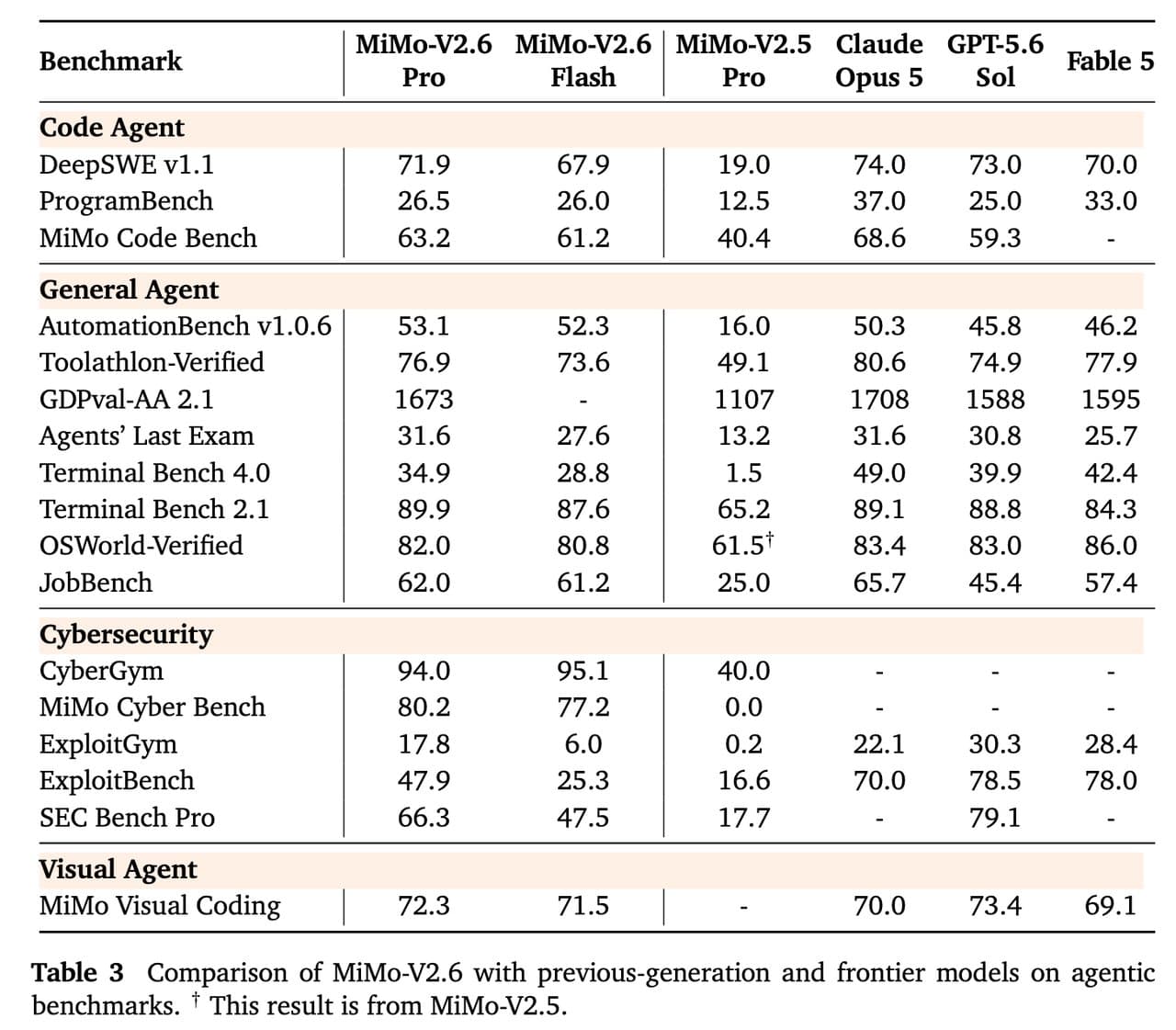
The MiMo-V2.6 series, comprising the heavyweight MiMo-V2.6 Pro and the hyper-efficient MiMo-V2.6 Flash, introduces a level of omnimodal intelligence previously unseen in the open-source ecosystem. By leveraging scaled reinforcement learning (RL) across complex, verifiable domains, Xiaomi has delivered a model that doesn't just predict the next token—it reasons, acts, and iterates like a human agent.
- Release Date: September 21, 2026
- Significance: Highest scoring open-source model on the Artificial Analysis Intelligence Index (46 points)
- Core Innovation: Scaled Reinforcement Learning for agentic workflows
Architecture: 1 Trillion Parameters and Sparse MoE Efficiency
At the heart of MiMo-V2.6 Pro lies a massive 1.02T parameter architecture. However, the true engineering marvel is its implementation of Sparse Mixture-of-Experts (MoE). While the total parameter count is staggering, only 42B parameters are activated per token, allowing for high-level reasoning capabilities without the prohibitive computational overhead typically associated with trillion-parameter models.
The model is truly omnimodal, natively processing text, images, video, and audio within a single unified transformer architecture. This eliminates the 'modality gap' found in many ensemble models. Furthermore, with a massive 1M-token context window, developers can feed entire codebases, hour-long videos, or massive technical documentations into the model for deep reasoning and retrieval-augmented generation (RAG).
- Total Parameters: 1.02T
- Activated Parameters: 42B (Sparse MoE)
- Context Window: 1,000,000 tokens
- Modalities: Text, Image, Video, Audio
The 'You Only RL Once' Breakthrough
What sets MiMo-V2.6 apart from its predecessors is the 'You Only RL Once' (YORO) training methodology. Instead of fragmented training stages, Xiaomi implemented a single, massive mixed RL run. This run spans diverse and high-difficulty domains including advanced coding, general-purpose agents, visual reasoning, and cybersecurity.