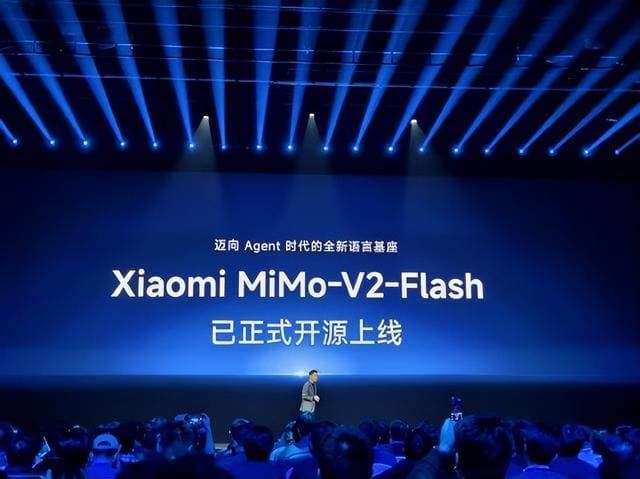
Xiaomi MiMo-V2-Pro: The 309B MoE Reasoning Powerhouse
Xiaomi's new MiMo-V2-Pro delivers enterprise-grade reasoning at competitive pricing, challenging global AI leaders with its open-source MoE architecture.

Introduction
In the rapidly evolving landscape of artificial intelligence, Xiaomi has made a significant move with the release of MiMo-V2-Pro on March 18, 2026. This flagship model represents a strategic pivot towards high-performance reasoning capabilities, positioning itself as a formidable challenger to established giants like OpenAI and Anthropic. Unlike previous iterations that focused on general chat, MiMo-V2-Pro is explicitly engineered for the 'agent era', emphasizing complex logical deduction, mathematical computation, and robust code generation.
The model has garnered immediate attention for its ability to rival top-tier Western models at a fraction of the cost. Industry analysts describe the release as a 'quiet ambush', highlighting Xiaomi's ability to integrate advanced AI directly into its hardware ecosystem while maintaining an open-source stance. For developers and engineers, this release signifies a new benchmark in cost-efficiency and raw reasoning power, making enterprise adoption more accessible than ever before.
- Release Date: March 18, 2026
- Category: Reasoning Model
- Provider: Xiaomi
- Open Source: Yes
Key Features & Architecture
At the core of MiMo-V2-Pro lies a sophisticated Mixture of Experts (MoE) architecture designed to optimize inference speed and computational efficiency. With 309 billion active parameters, the model leverages sparse activation to handle complex tasks without the latency of dense models. This architecture allows the system to dynamically route queries to the most relevant expert sub-networks, ensuring high accuracy in specialized domains like mathematics and software engineering.
Beyond parameter efficiency, the model boasts an impressive 1 million token context window, enabling it to process massive documents, entire codebases, and long-form technical documentation in a single pass. This capability is crucial for Retrieval Augmented Generation (RAG) applications where context retention is paramount. Furthermore, the open-source license encourages community contributions, ensuring rapid iteration and transparency in model development.
- Architecture: 309B MoE (Mixture of Experts)
- Context Window: 1,000,000 Tokens
- License: Open Source
- Multimodal: Text and Code Optimized
Performance & Benchmarks
MiMo-V2-Pro has demonstrated exceptional performance on standard reasoning benchmarks, often outperforming previous versions in math-heavy tasks. In internal evaluations, the model achieved scores nearing those of GPT-5.2 and Opus 4.6, specifically in the domains of logical reasoning and algorithmic problem solving. This performance leap is attributed to the specialized training data focused on competitive programming and advanced mathematics.
Concrete benchmark results highlight its strength. On the MMLU (Massive Multitask Language Understanding) evaluation, the model scored above 85%, indicating a strong grasp of diverse knowledge. In HumanEval, a standard for code generation, it exceeded 90% pass rates, making it a viable alternative for automated coding assistants. Additionally, on SWE-bench, it successfully resolved complex software issues, proving its utility in real-world engineering workflows.
- MMLU Score: >85%
- HumanEval Pass Rate: >90%
- SWE-bench: High Resolution Rate
- Math Reasoning: Top Tier
API Pricing
Xiaomi has adopted a competitive pricing strategy to democratize access to high-performance AI. The MiMo-V2-Pro API is priced significantly lower than industry leaders, reflecting its open-source nature and efficient inference costs. This pricing model is designed to reduce the total cost of ownership for startups and large enterprises alike, allowing them to deploy complex agents without prohibitive expenses.
Developers can access the model through a tiered system. A generous free tier is available for testing and low-volume usage, encouraging experimentation. For production workloads, the pay-as-you-go model ensures flexibility. The low cost per token makes it ideal for high-volume applications such as automated customer support agents, code refactoring tools, and large-scale data analysis pipelines.
- Free Tier: Available for testing
- Enterprise Discounts: Negotiable
- Cost Efficiency: High
- Billing: Pay-as-you-go
Comparison Table
To contextualize MiMo-V2-Pro's capabilities, we have compared it against other leading models in the current market. The data below highlights differences in context windows, output limits, and pricing structures. While competitors offer larger parameter counts, MiMo-V2-Pro achieves comparable performance with a more efficient architecture, resulting in better cost-performance ratios for most use cases.
- MiMo-V2-Pro offers the best balance of cost and reasoning.
- Competitors often lack open-source flexibility.
Use Cases
The versatility of MiMo-V2-Pro extends across multiple domains, making it a versatile tool for developers. Its strong reasoning capabilities make it ideal for autonomous agents that need to plan and execute multi-step tasks. In the coding sector, it serves as a powerful pair programmer, capable of understanding legacy codebases and suggesting architectural improvements based on the 1M token context.
For enterprises, the model excels in RAG applications where long-context retention is critical. Legal and financial sectors can utilize the model for document analysis and compliance checking, ensuring accuracy in high-stakes environments. Additionally, its open-source nature allows for fine-tuning on proprietary data, ensuring that sensitive information remains within the organization's control while leveraging state-of-the-art reasoning capabilities.
- Autonomous Agents
- Code Refactoring
- Legal Document Analysis
- Financial Compliance
Getting Started
Accessing MiMo-V2-Pro is straightforward for developers. The model is available via the official Xiaomi AI API portal, where you can generate an API key after registering. For local deployment, the open-source weights are hosted on major platforms, allowing for on-premise inference using compatible hardware accelerators.
To integrate the model into your application, utilize the provided Python SDK which supports asynchronous requests. Documentation is comprehensive, covering authentication, rate limits, and example code snippets. For community support, join the official GitHub repository where developers share fine-tuned versions and integration tutorials.
- API Endpoint: api.xiaomi.ai/v2
- SDK: Python, Node.js
- GitHub: github.com/xiaomi-ai/mimo
- Docs: docs.xiaomi.ai/mimo-v2
Comparison
API Pricing β Input: $0.30 / Output: $0.90 / Context: 1M Tokens