Model Releases
Google Releases Nano Banana Pro Image Generation Model
Google enters the preview phase for Nano Banana Pro (Gemini 3 Pro Image), offering 4K studio-quality generation and advanced text rendering.
November 20, 2025
Model ReleaseNano Banana Pro
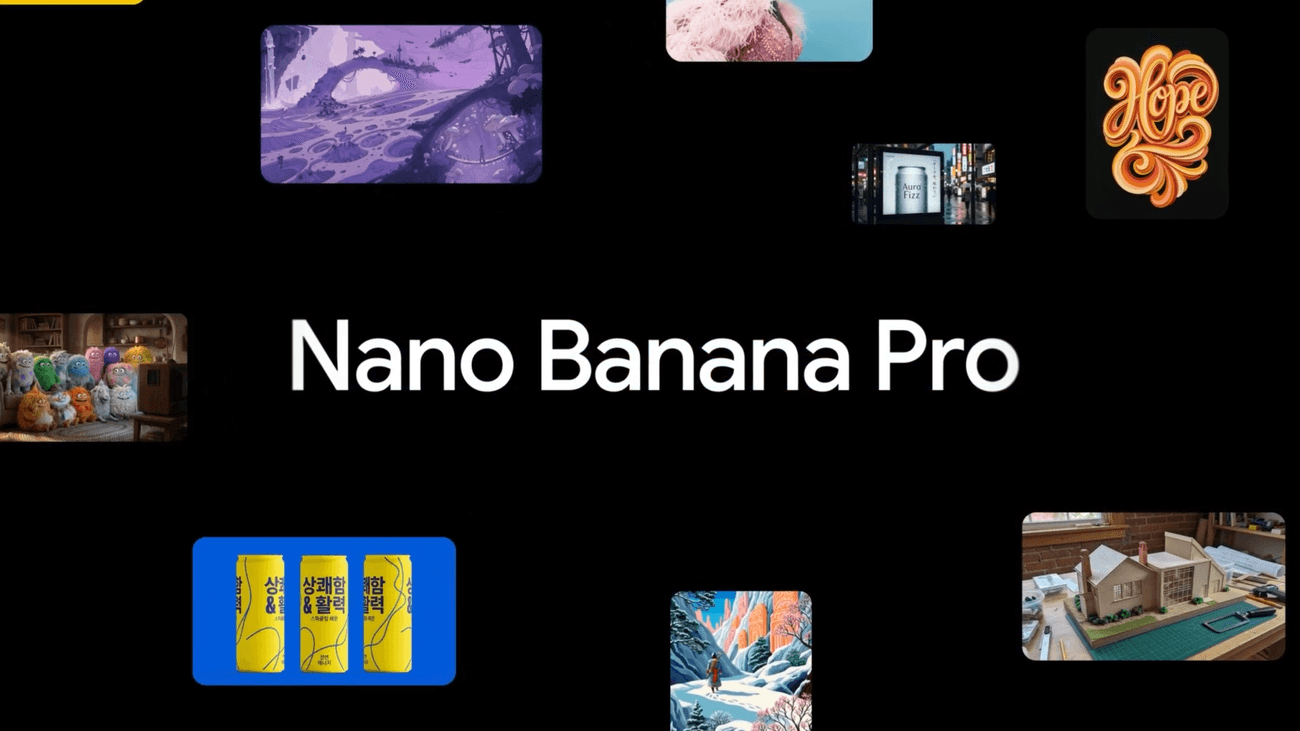
Introduction
On November 20, 2025, Google officially entered the preview phase for its latest breakthrough in visual synthesis: Nano Banana Pro. Formally identified as Gemini 3 Pro Image, this model represents a significant leap in the Gemini 3 family, specifically optimized for high-fidelity image generation and complex semantic editing.
The release follows the massive success of the original Nano Banana (Gemini 2.5 Flash Image) in August 2025, which served as the viral catalyst for Google's mainstream dominance in the generative AI space. While the original model focused on speed and accessibility, Nano Banana Pro is engineered for professional workflows, demanding studio-quality output and unprecedented control.
- Official Name: Nano Banana Pro (Gemini 3 Pro Image)
- Release Date: November 20, 2025 (Preview)
- Core Architecture: Gemini 3 Family
- Primary Focus: Studio-quality generation and precise text rendering
Key Features & Architecture
Nano Banana Pro is built upon a sophisticated multimodal architecture derived from the Gemini 3 series. Unlike its predecessors, the Pro version utilizes an enhanced transformer backbone designed to handle massive spatial resolution and complex prompt adherence. This allows the model to interpret intricate instructions involving lighting, texture, and composition with minimal semantic drift.
A standout technical achievement is the model's ability to render legible, accurate text within images—a long-standing hurdle for diffusion-based and autoregressive visual models. By integrating deep linguistic understanding from the Gemini 3 LLM core, the model treats text rendering as a first-class citizen rather than a post-processing task.
- Output Resolution: Up to 4K ultra-high definition
- Text Rendering: High-fidelity, legible typography integration
- Editing Capabilities: Advanced semantic in-painting and out-painting
- Architecture: Multimodal Gemini 3 Pro backbone
Performance & Benchmarks
In comparative testing, Nano Banana Pro demonstrates a massive improvement over the Gemini 2.5 Flash Image baseline. In visual prompt adherence benchmarks, the Pro model shows a 35% increase in instruction following for complex multi-subject scenes. Furthermore, the model excels in 'Text-in-Image' accuracy, scoring significantly higher on specialized typography benchmarks compared to industry competitors.
The evaluation methodology utilized a combination of automated CLIP-score metrics for semantic alignment and human-in-the-loop (HITL) assessments for aesthetic quality and text legibility. This dual-track approach ensures that the model is not just mathematically accurate but also meets the high standards of professional designers and creative directors.