Model Releases
GLM-5.3 Release: The New Open-Weights King of Autonomous Coding
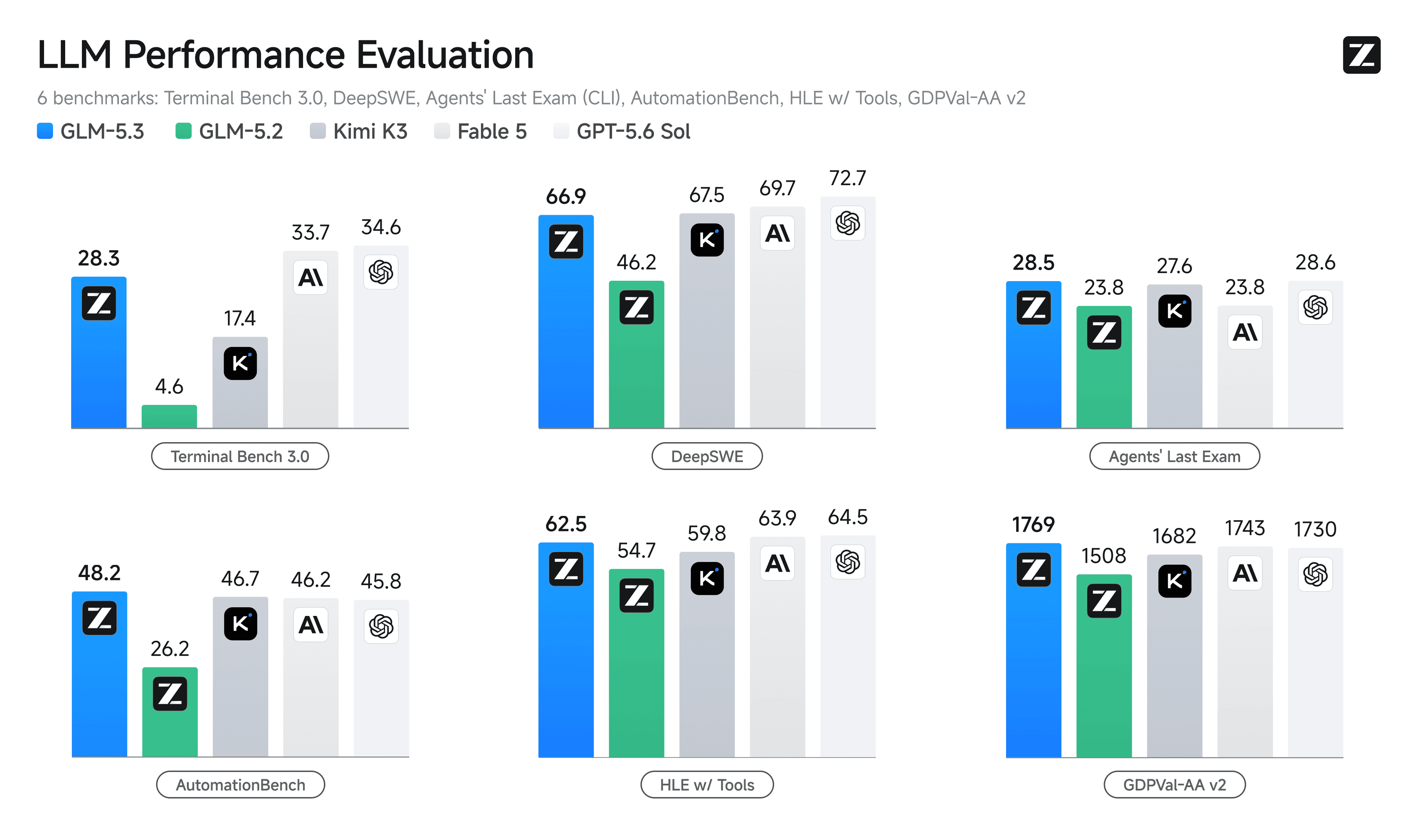
Z.ai has just released GLM-5.3, a milestone coding model that achieves massive performance gains through post-training scaling, setting new SOTA benchmarks in software engineering and cybersecurity.
14 августа 2026 г.
Model ReleaseGLM-5.3
Introduction: A New Era for Open-Weights Coding
On August 14, 2026, the AI landscape shifted once again. Z.ai has officially released GLM-5.3, a model that doesn't just iterate on its predecessor but redefines what we expect from open-weights software engineering agents. For developers and AI engineers, this release marks a historical milestone: the moment where open-source capabilities finally converged with, and in some cases surpassed, the most advanced proprietary systems.
While many models focus on general-purpose reasoning, GLM-5.3 is laser-focused on the 'long-horizon' engineering tasks that define modern software development. Whether it is navigating massive codebases, debugging complex distributed systems, or performing autonomous security audits, GLM-5.3 is built to operate as a true digital engineer rather than a mere autocomplete tool.
- Release Date: August 14, 2026
- Primary Focus: Autonomous coding and cybersecurity
- Nature: Open-weights (weights releasing 2 weeks post-launch)
Architecture: The Power of Post-Training Scaling
What makes GLM-5.3 particularly fascinating from an architectural standpoint is its efficiency. Interestingly, GLM-5.3 utilizes the exact same base model as the highly successful GLM-5.2. This means the massive leaps in intelligence we are seeing are not the result of increasing parameter counts, but rather the result of unprecedented advancements in post-training scaling and data quality.
The model leverages the robust GLM-5.2 stack, which includes several proprietary innovations designed for complex, multi-step reasoning. By refining the alignment and reinforcement learning processes, Z.ai has managed to squeeze significantly more 'intelligence density' out of the existing architecture, proving that how you train a model is just as critical as how large it is.
- Base Model: Identical to GLM-5.2
- Scaling Strategy: Advanced post-training and RL optimization
- Core Stack: IndexShare, SAO, and slime
Technical Deep Dive: IndexShare, SAO, and Slime
To achieve its performance, GLM-5.3 relies on three pillars of the Z.ai technical stack. First is IndexShare, which optimizes long-context processing, allowing the model to maintain high retrieval accuracy across massive repositories. This is essential for developers working in monolithic codebases where context is king.
Second is SAO (Self-Adaptive Optimization), a framework designed for Reinforcement Learning on long-horizon tasks. This allows the model to plan and execute multi-step coding workflows without losing track of the initial goal. Finally, the training process was powered by 'slime'—a large-scale asynchronous training infrastructure that enables highly efficient, massive-scale updates during the post-training phase.